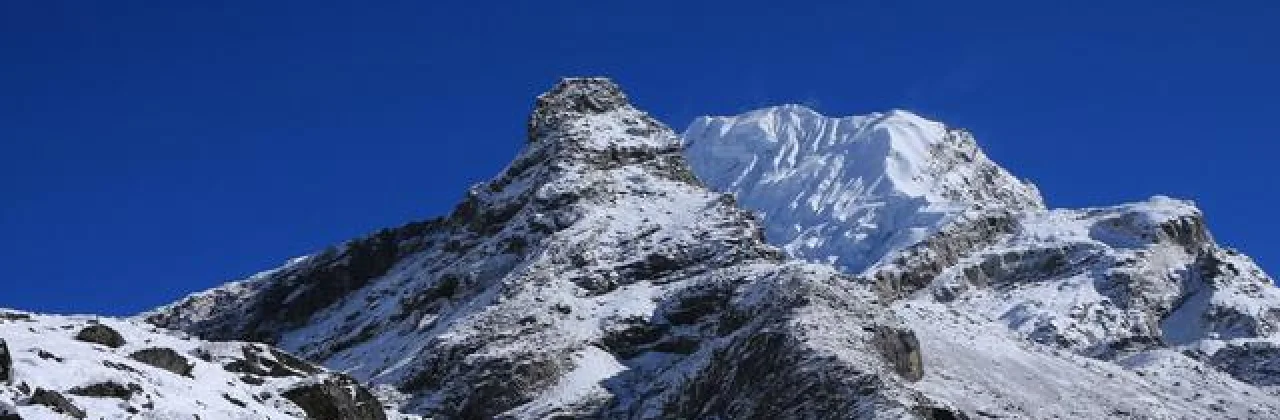
Lobuche Peak Climbing with Trail Mania Trek combines the iconic Everest Base Camp trek with an exciting Himalayan summit adventure. Trek through Namche, Dingboche and Lobuche, visit Everest Base Camp and Kala Patthar, then climb Lobuche Peak for spectacular mountain views and unforgettable memories.
Hotel in Kathmandu and a Tea House / Lodge / Camp during the trek
Lobuche Peak Climbing with Trail Mania Trek is an exciting Himalayan adventure that combines the classic Everest Base Camp trekking route with the challenge of reaching a 6,119-meter summit. The itinerary provided takes you from Kathmandu through Lukla, Phakding, Namche Bazaar, Tengboche, Dingboche, Lobuche, and Gorak Shep, allowing gradual acclimatization before the climbing phase. You will visit Everest Base Camp and Kala Patthar before returning to Lobuche for the high-camp and summit preparation. Lobuche East is the commonly climbed summit and is classified as a trekking peak, although the climb itself involves genuine mountaineering skills, including glacier travel, crampon use, fixed ropes and steep snow or ice sections.
Trail Mania Trek designs the journey to balance trekking, acclimatization and climbing. The acclimatization days at Namche and Dingboche are particularly important because the itinerary reaches elevations above 5,000 meters before the summit attempt. After the summit, the route descends through Pangboche and Namche before returning to Lukla for the flight to Kathmandu. The summit offers exceptional views of Everest, Lhotse, Nuptse, Ama Dablam, Pumori and the surrounding Khumbu landscape.
The best seasons for Lobuche Peak Climbing with Trail Mania Trek are generally spring and autumn, when Himalayan weather is more favorable for trekking and climbing. Spring, particularly April and May, offers comparatively stable conditions, longer daylight hours, and generally good visibility. The post-winter period can also provide suitable snow conditions for climbing, while temperatures are usually more manageable than during the coldest winter months. These characteristics make spring one of the preferred periods for attempting a 6,000-meter Himalayan peak.
Autumn, especially October and November, is another excellent period. After the summer monsoon, the atmosphere often becomes clearer, giving trekkers spectacular views of Everest and the surrounding peaks. Trails are generally drier, and mountain visibility can be excellent. Trail Mania Trek can plan the itinerary around the preferred climbing window while allowing flexibility for mountain weather. Although climbing can technically be organized outside the main seasons, winter brings extreme cold and shorter days, while the monsoon period can bring rain at lower elevations and less predictable mountain conditions.
The main seasonal advantages are:
Lobuche Peak is a demanding Himalayan climbing objective rather than an ordinary trekking destination. Although Lobuche East is officially categorized as a trekking peak, the ascent can involve steep snow and ice, mixed rock terrain, fixed ropes, crampons, an ice axe, and exposure on higher sections. The summit push can be physically demanding because climbers are operating at elevations approaching 6,119 meters. Previous high-altitude trekking or climbing experience is beneficial, while good cardiovascular fitness, endurance and familiarity with basic mountaineering techniques are strongly recommended.
The transportation component begins with a flight from Kathmandu to Lukla, the principal gateway to the Everest region. From Lukla, the journey continues primarily on foot through Phakding, Namche Bazaar, Tengboche, Dingboche and Lobuche. There are no conventional road connections along the main trekking route, so trekking, porter support and local logistics are essential. After completing the climb, you descend to Lukla and take a return flight to Kathmandu. Trail Mania Trek coordinates the transportation arrangements and trekking logistics as part of the overall expedition planning.
Important difficulty and transportation considerations:
Food and accommodation are important parts of maintaining energy throughout the Lobuche Peak adventure. During the trekking section, Trail Mania Trek generally organizes accommodation in comfortable local teahouses or lodges along the Everest route. Facilities become increasingly basic as altitude increases, particularly around Lobuche and the climbing camps. In the lower villages, trekkers can usually expect dining rooms, shared facilities and a range of traditional and international meals, while higher elevations have fewer choices and more basic amenities.
Meals should provide sufficient carbohydrates, protein and calories for long trekking days and the summit attempt. Common trekking foods include dal bhat, rice, vegetables, noodles, pasta, potatoes, soups, eggs, bread and other simple dishes. Hot drinks such as tea and coffee are also commonly available. During the climbing phase, camping arrangements may be required at Base Camp or High Camp, depending on the exact operational plan. At these higher camps, meals are prepared by the climbing support team and focus on easily digestible, energy-rich foods. Similar Lobuche itineraries commonly use a combination of hotel, teahouse and camping accommodation.
Typical arrangements include:
Lobuche Peak Climbing requires the appropriate climbing and trekking permissions before entering the climbing route. For Lobuche East, the peak-specific permit is associated with the Nepal Mountaineering Association (NMA), while trekkers also need the permits applicable to the Everest/Khumbu region. Current sources identify the NMA peak permit, Sagarmatha National Park entry permit, and the Khumbu Pasang Lhamu Rural Municipality permit among the principal permissions used for this journey.
Permit fees and regulations can change according to season and government or regulatory decisions, so Trail Mania Trek can arrange and verify the required documentation before departure. Current published 2026 information lists different NMA peak-permit rates according to season, with spring carrying a higher fee than autumn and the off-season. Because regulations and charges can change, travelers should confirm the final permit costs and inclusions with Trail Mania Trek when booking rather than relying on older figures.
Common permit requirements include:
Choosing Lobuche Peak Climbing with Trail Mania Trek gives adventure travelers an opportunity to combine the iconic Everest Base Camp experience with a genuine Himalayan climbing objective. Instead of simply trekking to Base Camp, the itinerary continues toward a 6,000-meter summit, creating a more challenging and rewarding expedition. The route also incorporates acclimatization at Namche Bazaar and Dingboche, followed by Everest Base Camp and Kala Patthar before the climbing phase. This progressive approach helps climbers become accustomed to increasing altitude before attempting the summit.
Another major attraction is the variety of experiences included in one journey. You experience Lukla's mountain environment, Sherpa settlements, Buddhist monasteries, the Khumbu Glacier landscape, Everest Base Camp and the spectacular summit panorama from Lobuche East. Trail Mania Trek can support the practical aspects of the journey, including trekking logistics, accommodation, meals, permits, transportation arrangements and climbing coordination. The summit, however, is always dependent on weather, snow conditions, individual health, acclimatization and the professional team's safety assessment; no responsible operator can guarantee a summit.
Reasons to choose this adventure include:
Upon your arrival in Kathmandu, the team from Trail Mania Trek will welcome you at Tribhuvan International Airport and assist you with your transfer to the hotel. After check-in, you will have time to rest and recover from your journey. Depending on your arrival time, you can explore the nearby streets of Kathmandu or simply relax at the hotel. In the evening, your guide will provide a detailed briefing about the Lobuche Peak climbing itinerary, trekking conditions, equipment, safety procedures, and preparation for the adventure ahead. Overnight at a hotel in Kathmandu.
Your Himalayan adventure begins with an exciting morning flight from Kathmandu to Lukla, offering spectacular views of the Himalayan mountain ranges. After landing at Lukla, you will meet the supporting trekking staff and begin walking through the beautiful mountain landscape. The trail passes through small Sherpa settlements, Buddhist prayer stones, suspension bridges, and green valleys before reaching Phakding. The relatively short first-day trek allows your body to begin adapting to the increasing altitude while enjoying the peaceful surroundings of the Khumbu region. Overnight at a teahouse in Phakding.
After breakfast, you will continue trekking along the Dudh Koshi River toward the famous Sherpa town of Namche Bazaar. The trail crosses several suspension bridges and passes through beautiful pine and rhododendron forests. As you approach Sagarmatha National Park, you will complete the necessary entry formalities before continuing toward Namche. The final section is a steady uphill climb, but reaching Namche provides a rewarding sense of achievement. If weather conditions are clear, you may catch your first impressive views of Everest and other surrounding peaks. Overnight at a teahouse in Namche Bazaar.
Today is an important acclimatization day designed to help your body adjust to the increasing altitude. Rather than remaining completely inactive, you will take a short hike around the Namche area. You may visit the Everest View Hotel or nearby viewpoints for magnificent panoramas of Everest, Ama Dablam, Lhotse, Nuptse, and other Himalayan peaks. You will also have time to explore the lively Sherpa town, visit local shops, or learn more about Sherpa culture and mountain traditions. Your guide from Trail Mania Trek will monitor your condition and provide advice on hydration, nutrition, and altitude awareness. Overnight at Namche Bazaar.
The trail leaves Namche Bazaar and follows a scenic route along the hillsides, providing outstanding views of Everest, Lhotse, Nuptse, Ama Dablam, and Thamserku. After a gradual walk, you will descend toward the Dudh Koshi River before beginning the climb toward Tengboche. The final uphill section passes through forests filled with rhododendron, pine, and fir trees. Tengboche is renowned for its historic Buddhist monastery and spectacular mountain scenery. Upon arrival, you can visit the monastery and experience the peaceful spiritual atmosphere of the Khumbu region. Overnight at a teahouse in Tengboche.
Today, you will continue deeper into the Everest region as the landscape gradually becomes drier and more rugged. The trail descends through beautiful forests before reaching the settlement of Deboche and crossing the Imja Khola. From there, the route gradually climbs toward Pangboche, one of the oldest permanent settlements in the Khumbu. You will continue through alpine terrain with spectacular views of Ama Dablam and surrounding peaks before reaching Dingboche. At this altitude, the vegetation becomes noticeably thinner, reminding you that you are entering a high Himalayan environment. Overnight at a teahouse in Dingboche.
Another important acclimatization day is scheduled at Dingboche to prepare your body for the higher elevations ahead. After breakfast, you will take an acclimatization hike toward the Chhukung Valley. The trail provides magnificent views of Ama Dablam, Lhotse, Island Peak, and other impressive Himalayan peaks. The purpose of today's hike is to gain altitude during the day and return to Dingboche for the night, helping your body adapt gradually. You will have time to rest, hydrate, and prepare for the demanding sections of the Lobuche Peak adventure. Overnight at Dingboche.
After breakfast, you will leave Dingboche and continue toward Lobuche, entering increasingly rugged and high-altitude terrain. The trail climbs gradually toward the Khumbu Glacier and passes through the small settlement of Thukla. From Thukla, you will ascend the steep memorial area known as Thukla Pass, where memorials honor climbers and mountaineers who lost their lives in the Himalayas. After this emotional and scenic section, the trail becomes more gradual as it follows the moraine toward Lobuche. Surrounded by dramatic peaks, you will settle into the high-altitude environment and prepare for the Everest Base Camp excursion. Overnight at Lobuche.
Today is one of the most memorable days of the expedition as you make your way toward Everest Base Camp. The trail from Lobuche follows the rugged terrain beside the Khumbu Glacier before reaching Gorak Shep, the last settlement on the route. After a short rest and lunch, you will continue toward Everest Base Camp. The trail is challenging because of the altitude and rocky glacial terrain, but the surrounding scenery is spectacular. At Base Camp, you can enjoy views of the Khumbu Icefall and surrounding Himalayan peaks before returning to Gorak Shep and then Lobuche for the night.
You will begin early today for the challenging ascent of Kala Patthar, one of the most famous viewpoints in the Everest region. The early start is intended to provide an opportunity to witness the magnificent sunrise illuminating Everest, Nuptse, Pumori, and the surrounding Himalayan peaks. The climb is demanding due to the altitude, but reaching the viewpoint offers an unforgettable panoramic experience. After spending time enjoying the scenery and taking photographs, you will descend toward Gorak Shep and continue back to Lobuche. The rest of the day will be dedicated to recovery and preparation for the upcoming peak-climbing section.
Today marks the transition from trekking to the technical climbing phase of your expedition. After breakfast, you will leave Lobuche and follow the trail toward Lobuche High Camp. The route crosses rocky and glacial terrain, requiring careful attention to footing as the altitude increases. Upon reaching High Camp, your climbing guide will help you prepare your equipment and review the procedures required for summit day. Depending on the conditions, you may practice using climbing equipment such as crampons, harnesses, ropes, and an ice axe. An early dinner and sufficient rest are essential because you will begin the summit attempt during the night or very early morning.
Today is the main objective of the expedition: climbing Lobuche Peak. You will start very early, usually before dawn, depending on weather and route conditions. The climb involves steep sections where your guide will use appropriate rope and climbing techniques to ensure a safe ascent. As you gain elevation, the views of Everest, Lhotse, Nuptse, Ama Dablam, Pumori, and the surrounding Himalayan peaks become increasingly spectacular. Reaching the summit is a major achievement and provides an unforgettable sense of accomplishment. After spending a limited time at the summit, you will carefully descend with your climbing team and return to High Camp for rest.
After the demanding summit day, you will begin your descent toward the lower elevations. Descending is generally easier on the lungs, and the gradual return to warmer and greener landscapes provides a welcome change after several days in the high mountains. The trail passes through Lobuche, Thukla, and along the familiar route toward the Imja Valley. You will continue toward Pangboche, surrounded by spectacular views of Ama Dablam and other Himalayan peaks. The lower altitude allows your body to recover after the climb, while the beautiful scenery provides a relaxing conclusion to the technical section of the expedition. Overnight at Pangboche.
Today, you will retrace part of the trail through the beautiful Khumbu landscape toward Namche Bazaar. The route passes through forests of rhododendron, pine, and juniper while offering impressive views of Ama Dablam and other surrounding mountains. You will cross the Dudh Koshi River and gradually ascend toward Namche. After reaching the bustling Sherpa town, you can enjoy a comfortable evening, explore the local streets, or celebrate the successful progress of your Lobuche Peak expedition with your trekking team. Overnight at a teahouse in Namche Bazaar.
Your final trekking day takes you from Namche Bazaar back toward Lukla. The trail descends through familiar forests and crosses several suspension bridges along the Dudh Koshi Valley. Although much of the route is downhill, there are still several uphill sections that can make the day physically demanding. Along the way, you will pass through villages and enjoy your final views of the Himalayan landscape. Upon reaching Lukla, you can relax and celebrate the completion of your trekking and climbing adventure with your guides, porters, and fellow trekkers. Overnight at a teahouse in Lukla.
After breakfast, you will head to the Lukla airport for your scenic flight back to Kathmandu. The short mountain flight offers one final opportunity to enjoy aerial views of the Himalayan terrain before returning to the capital. After arriving in Kathmandu, the Trail Mania Trek team will transfer you to your hotel. The remainder of the day is free for rest and relaxation. You may also explore Kathmandu, shop for souvenirs, enjoy a traditional Nepali meal, or simply celebrate the successful completion of your Lobuche Peak climbing journey.
Your Lobuche Peak climbing adventure with Trail Mania Trek comes to an end today. Depending on your flight schedule, you will have free time to relax at the hotel or take a final walk around Kathmandu. Our representative will arrange your transfer to Tribhuvan International Airport in time for your international departure. As you leave Nepal, you will carry unforgettable memories of the Everest region, Sherpa villages, Buddhist monasteries, dramatic Himalayan landscapes, Everest Base Camp, and the successful ascent of Lobuche Peak. We hope to welcome you again for another Himalayan adventure with Trail Mania Trek.
Your Start Date is the day you land in Nepal, and your End Date is when you fly home.
If the set Lobuche Peak Climbing group dates don’t suit your schedule, we can offer alternative dates upon request.
Lobuche Peak Climbing with Trail Mania Trek is an exciting Himalayan adventure that combines the classic Everest Base Camp trekking experience with the technical challenge of climbing Lobuche Peak. The journey takes you through beautiful Sherpa villages, Buddhist monasteries, high mountain valleys, and dramatic glacial landscapes before reaching the summit. Our itinerary is designed with acclimatization days to help trekkers gradually adjust to high altitude while preparing physically and mentally for the summit attempt.
Lobuche Peak Climbing is considered a challenging Himalayan expedition because it combines high-altitude trekking with technical climbing. Trekkers need good physical fitness, endurance, determination, and the ability to walk for several hours on consecutive days. The summit section can involve steep snow and ice, depending on seasonal conditions. Trail Mania Trek provides experienced climbing guides who offer guidance throughout the technical sections and help climbers use equipment safely. Previous mountaineering experience is beneficial but is not always essential for properly prepared and fit adventurers.
Previous climbing experience is helpful, but you do not necessarily need extensive mountaineering experience to attempt Lobuche Peak. A good level of physical fitness, proper preparation, and willingness to learn are particularly important. Trail Mania Trek provides experienced climbing guides who can explain essential techniques and assist with equipment such as crampons, harnesses, ropes, and ice axes. However, participants should be comfortable with long trekking days and be prepared for physically demanding conditions at high altitude.
Lobuche Peak is located in Nepal's Khumbu region at an elevation of approximately 6,119 meters (20,075 feet) for Lobuche East, the peak commonly climbed on commercial expeditions. The significant altitude makes acclimatization one of the most important aspects of the expedition. The itinerary organized by Trail Mania Trek includes gradual elevation gains and dedicated acclimatization days in places such as Namche Bazaar and Dingboche. Climbers must still remain alert for symptoms of altitude sickness and communicate immediately with their guide if they feel unwell.
A standard Lobuche Peak Climbing journey with Trail Mania Trek can take around 17 days, depending on the chosen itinerary, weather, flight conditions, acclimatization requirements, and climbing conditions. The itinerary typically begins with arrival in Kathmandu and continues through Lukla, Namche Bazaar, Tengboche, Dingboche, Lobuche, Everest Base Camp, and Kala Patthar before the summit attempt. After climbing the peak, you descend through the Khumbu Valley and return to Lukla before flying back to Kathmandu for your international departure.
Altitude awareness is a major priority during Lobuche Peak Climbing because the itinerary reaches elevations above 6,000 meters. Trail Mania Trek follows a gradual ascent strategy with acclimatization days to give the body time to adapt. Guides monitor trekkers for symptoms such as headache, dizziness, nausea, unusual fatigue, or difficulty breathing. Climbers are encouraged to stay hydrated, eat properly, avoid unnecessary exertion, and communicate openly with the guide. If serious altitude-related symptoms develop, descending to a lower elevation is the safest response, and the guide will coordinate appropriate assistance.
Lobuche Peak can be suitable for adventurous beginners who have strong physical fitness, good trekking endurance, and adequate preparation, although it should not be treated as an easy trekking destination. The combination of long trekking days, high altitude, cold temperatures, and technical climbing makes preparation essential. Trail Mania Trek provides experienced guides and a structured itinerary to support climbers throughout the journey. Beginners should ideally undertake regular cardiovascular training, strength exercises, hiking practice, and, if possible, some introductory mountaineering or crampon training before arriving in Nepal.
Trail Mania Trek focuses on providing a well-organized and safety-conscious Himalayan experience, supported by experienced local trekking and climbing guides. Our Lobuche Peak itinerary combines acclimatization, Everest Base Camp, Kala Patthar, and the peak summit attempt, allowing travelers to experience both the cultural and natural highlights of the Khumbu region. We assist with logistics, accommodation, permits, trekking support, and climbing preparation while maintaining flexibility for changing mountain conditions. Our goal is to make the expedition professionally managed, enjoyable, and memorable from arrival in Kathmandu through your final departure.
The best seasons for Lobuche Peak Climbing are generally spring and autumn, when the weather and mountain conditions are typically more favorable. Spring, especially from March to May, offers relatively stable conditions and beautiful mountain scenery. Autumn, particularly from September to November, is popular for its clear skies, excellent visibility, and comfortable trekking conditions. Although climbing can be attempted in other seasons, weather, snow, wind, and trail conditions can make the expedition considerably more challenging. Trail Mania Trek can advise you on the most suitable departure period.
Mountain weather can change rapidly, and summit success cannot be guaranteed even when climbers are well prepared. Strong winds, snowfall, poor visibility, unstable snow conditions, or other unfavorable weather can make a summit attempt unsafe. Trail Mania Trek places safety above reaching the summit and relies on the assessment of experienced climbing guides when deciding whether conditions are suitable. If necessary, the summit attempt may be delayed or adjusted. Flexibility is therefore important when joining a high-altitude climbing expedition in the Himalayas.
Lobuche Peak Climbing requires the appropriate permits and entry documents for the trekking and climbing areas. These can include the relevant national park or conservation-area entry requirements and a climbing permit for the peak. The exact requirements and fees can change according to Nepalese regulations and the climbing season. Trail Mania Trek assists clients with the necessary permit arrangements as part of the expedition preparation. Before departure, our team will explain the required documentation and make sure the necessary formalities are handled properly.
During the trekking portion of the Lobuche Peak expedition, accommodation is generally provided in local teahouses or mountain lodges. These establishments offer basic but comfortable rooms and communal dining areas where trekkers can eat, rest, and socialize. Facilities become increasingly basic as you move toward the higher elevations. At Lobuche High Camp, accommodation is typically more basic and expedition-style. Trail Mania Trek selects practical accommodation according to availability, location, and trekking conditions while prioritizing the comfort and safety of our clients.
Meals during the trek generally include a variety of local and familiar dishes designed to provide sufficient energy for long trekking and climbing days. Breakfast, lunch, and dinner may include options such as dal bhat, noodles, rice, pasta, soups, potatoes, vegetables, eggs, bread, and other available meals. At higher elevations, food choices can be more limited because supplies must be transported from lower regions. Trail Mania Trek encourages climbers to maintain good hydration and consume nutritious, carbohydrate-rich meals to support their energy requirements throughout the expedition.
Lobuche Peak requires both standard trekking equipment and specialized mountaineering gear. Essential items may include trekking boots, warm clothing, a sleeping bag, waterproof layers, gloves, sunglasses, a headlamp, trekking poles, a backpack, and personal medical supplies. For the technical climbing section, equipment can include crampons, an ice axe, climbing harness, helmet, and appropriate rope or protection systems. Trail Mania Trek provides guidance on the required equipment before departure and can clarify which technical climbing gear is included, available for rental, or should be brought personally.