Mera Peak Climbing with Trail Mania Trek is an unforgettable Himalayan adventure featuring scenic Lukla flights, remote Hinku Valley trails, acclimatization, climbing training, and a thrilling summit at 6,461m, followed by spectacular mountain views and a scenic descent through Zatrwa La Pass.
Hotel in Kathmandu and a Tea House / Lodge / Camp during the trek
Mera Peak Climbing is one of Nepal’s most rewarding Himalayan climbing adventures, combining a remote high-altitude trek with the experience of ascending a 6,000-meter-class Himalayan summit. Organized by Trail Mania Trek, this 18-day itinerary begins with arrival in Kathmandu and includes sightseeing, trek preparation, a scenic flight to Lukla, and a gradual approach through the quieter valleys of the Khumbu region. The route passes through Paiya, Panggom, Ningsow, Chhatra Khola, Kothe, Thaknak, and Khare before the climbing phase begins. The itinerary is designed to provide progressive acclimatization rather than rushing directly toward the summit.
The major objective is the ascent of Mera Peak, with the itinerary reaching Mera High Camp at approximately 5,780m before the summit attempt at around 6,461m. The summit day is physically demanding and requires an early start, appropriate mountaineering equipment, strong fitness, and careful attention to altitude. After the summit attempt, the journey returns through Kothe and Thuli Kharka before crossing the approximately 4,600m Zatrwa La Pass and reaching Lukla. A dedicated contingency day is also included, providing flexibility in case weather or mountain conditions affect the summit schedule. Government tourism information lists Mera Peak among Nepal’s recognized climbing peaks in the Khumbu/Sagarmatha region.
For travelers looking for a genuine Himalayan climbing experience away from the busiest trekking routes, Mera Peak offers an excellent combination of adventure, mountain scenery, Sherpa culture, and high-altitude challenge. With Trail Mania Trek, the itinerary can be supported by experienced guides and carefully planned logistics from Kathmandu through the trek and climbing stages.
Choosing the right season is extremely important for a successful Mera Peak expedition. The two principal climbing periods are spring, from March to May, and autumn, from September to November. These seasons generally offer better trekking and climbing conditions, with comparatively stable weather, clearer mountain views, and favorable visibility. Spring brings warmer conditions at lower elevations and gradually improving mountain weather, while autumn follows the monsoon and is often appreciated for clear skies and crisp Himalayan panoramas. For this reason, Trail Mania Trek generally recommends spring and autumn for climbers seeking a balance between weather, trail conditions, and mountain visibility.
The timing of the summit attempt can influence the overall experience considerably. At elevations above 5,000m, conditions can change quickly, and even during the preferred seasons, snowfall, strong winds, cloud, or freezing temperatures can affect the climbing schedule. The itinerary therefore includes a reserve day after the planned summit day. This flexibility is particularly useful because the team may need to adjust the climbing plan according to actual mountain and weather conditions rather than following the calendar rigidly.
Seasonal considerations include:
Current Nepal mountaineering fee schedules also distinguish spring, autumn, summer, and winter seasons, so the climbing season can affect both practical planning and permit costs. The government’s current mountain royalty framework has been revised in recent years, making it important to verify applicable fees before departure.
With Trail Mania Trek, travelers can select departure dates according to their preferred season, available time, and climbing experience. Regardless of season, the final decision to proceed toward the summit should always be based on the guide’s assessment of weather, route, snow conditions, and the climber’s health and acclimatization.
Mera Peak Climbing is generally considered a challenging high-altitude adventure rather than a conventional trekking holiday. Although the standard route does not normally involve highly technical mountaineering throughout the entire journey, the altitude makes the expedition demanding. The itinerary reaches more than 6,400m, and climbers must cope with cold temperatures, reduced oxygen, long walking days, steep terrain, and the physical demands of summit day. The approach itself includes several substantial trekking stages, including the 7–8-hour walk from Ningsow to Chhatra Khola and the 6–7-hour journey from Chhatra Khola to Kothe.
Acclimatization is one of the most important components of this itinerary. The gradual progression from Kathmandu at approximately 1,400m to Khare at around 5,045m gives the body time to adapt to increasing elevation. Day 10 is reserved for acclimatization and pre-climb training, allowing participants to rest while also practicing essential climbing skills. Depending on conditions and the team's plan, training can cover crampon use, ice-axe techniques, rope movement, climbing techniques, and safe movement on snow and ice. The summit day from Mera High Camp is particularly demanding and should never be underestimated.
Difficulty and transportation highlights:
Transportation begins with the flight from Kathmandu to Lukla, followed by trekking through the remote mountain settlements. The return follows the trekking route toward Lukla before the scheduled flight back to Kathmandu. Since Lukla flights can be affected by weather, Trail Mania Trek builds practical flexibility into the logistics and maintains communication regarding flight schedules and mountain conditions. Climbers should also understand that transportation in the Himalayas is weather-dependent and schedules can occasionally change.
Food and accommodation are important parts of maintaining energy and comfort during a Mera Peak expedition. Throughout the trekking route, accommodation is generally provided in local teahouses or trekking lodges, where travelers can experience the hospitality and culture of Himalayan communities. As the route moves deeper into the remote Hinku Valley and toward higher elevations, facilities become increasingly basic. At higher camps, particularly around Mera High Camp, accommodation is typically arranged in tents because permanent lodge infrastructure is limited or unavailable. Trail Mania Trek coordinates the necessary camping arrangements for the climbing section according to the expedition plan and prevailing conditions.
Meals on the trekking section generally focus on nutritious, filling foods suitable for long walking days. Typical options may include dal bhat, rice, noodles, pasta, potatoes, soups, vegetables, eggs, bread, Tibetan-style dishes, and other simple meals available at local lodges. At higher elevations, maintaining sufficient calorie and fluid intake becomes increasingly important. Climbers should drink regularly and eat even when appetite decreases because the combination of cold, altitude, and strenuous activity can significantly increase energy requirements.
Food and accommodation generally focus on:
Accommodation becomes progressively more basic as altitude increases, so climbers should approach the expedition with realistic expectations. The purpose of the high-altitude camps is safety, acclimatization, and summit preparation rather than luxury. Trail Mania Trek can help participants understand what facilities are available at each stage and what personal equipment they should bring.
Because food availability can vary according to location, weather, and supply conditions, climbers should also carry suitable snacks such as energy bars, dried fruit, chocolate, nuts, or other lightweight high-energy foods. Proper nutrition, hydration, rest, and sensible pacing all contribute to better performance during the summit attempt.
Mera Peak Climbing requires proper authorization and permits before entering the climbing phase. Permit requirements can depend on the current regulations, route, nationality, and season, so travelers should not rely on outdated permit information found online. Nepal’s Ministry of Culture, Tourism and Civil Aviation is responsible for policies and regulations relating to mountaineering, trekking, and tourism fees, while the Nepal Mountaineering Association (NMA) administers permits for designated trekking peaks.
For Mera Peak, the principal climbing authorization is the applicable Mera Peak climbing permit, along with the required protected-area/trekking and local entry permissions for the selected route. Current published fee information following the September 2025 revision places Mera Peak in the under-6,500m category, with a foreign climber royalty of US$350 in spring and US$175 in autumn, winter, and summer. Because government fees and administrative requirements can change, Trail Mania Trek should verify the latest applicable rates and documentation when processing a client’s permit.
Important permit considerations include:
For international climbers, it is particularly useful to have a professional trekking agency handle the paperwork because several documents may need to be coordinated before and during the expedition. Trail Mania Trek can arrange the necessary permits and help ensure that the expedition follows current Nepalese regulations. The government continues to publish directives and notices concerning mountain climbing and tourism administration, so permit information should always be checked against the latest official requirements.
Permit fees are only one part of the overall expedition budget. Travelers should also consider accommodation, meals, domestic flights, guide and porter services, climbing equipment, insurance, personal expenses, and possible contingency costs. Confirming exactly what is included in the package before booking helps avoid unexpected expenses.
Choosing Mera Peak Climbing with Trail Mania Trek provides an opportunity to experience Nepal’s Himalayan landscapes through a structured combination of trekking and mountaineering. The 18-day itinerary is designed to progress gradually from Kathmandu to Lukla, through the remote Hinku Valley, and finally to the high-altitude climbing environment around Khare and Mera High Camp. Rather than treating the summit as an isolated objective, the program incorporates acclimatization, preparation, training, and a reserve day, all of which are important components of a responsible high-altitude expedition.
One of the strongest attractions of this itinerary is its balance between adventure and cultural experience. The journey passes through mountain settlements such as Paiya, Panggom, Ningsow, Kothe, Thaknak, and Khare, allowing travelers to experience the quieter side of the Everest-region Himalayas. The return route through Thuli Kharka and over Zatrwa La adds another scenic dimension to the expedition. Along the way, trekkers can enjoy dramatic Himalayan landscapes, forests, valleys, ridges, and views of surrounding peaks while gradually adapting to the altitude.
Reasons to choose Trail Mania Trek include:
Mera Peak is also an attractive objective for adventurous trekkers who want to move beyond standard Himalayan trekking and gain experience at high altitude. However, it should not be considered an easy walk simply because it is categorized as a trekking peak. The summit at more than 6,400m presents genuine altitude and environmental challenges, making preparation and professional support essential.
With Trail Mania Trek, the goal is to make the expedition organized, practical, and memorable while respecting the realities of high-altitude travel. From Kathmandu preparation and Lukla logistics to acclimatization, climbing preparation, summit planning, and the return to Lukla, every stage contributes to the overall experience. Mera Peak Climbing is ultimately more than reaching a summit—it is an opportunity to challenge yourself, explore a remote Himalayan landscape, and create a meaningful mountain adventure in Nepal.
Upon your arrival at Tribhuvan International Airport in Kathmandu, a representative from Trail Mania Trek will welcome you and transfer you to your hotel. After check-in, you can rest and recover from your journey. Depending on your arrival time, you may have an opportunity to explore the nearby streets of Thamel, a lively tourist district filled with restaurants, trekking shops, and cultural attractions. In the evening, you will meet your climbing guide and receive a detailed briefing about the Mera Peak expedition, including the itinerary, safety procedures, equipment, and trekking conditions. Overnight at a hotel in Kathmandu.
Today combines cultural exploration with final preparation for your Mera Peak adventure. After breakfast, you will visit some of Kathmandu’s important cultural and historical attractions, which may include ancient temples, stupas, and heritage sites. The sightseeing provides an introduction to Nepal’s rich traditions before heading into the Himalayan wilderness. Later, you will meet the Trail Mania Trek team for a detailed expedition briefing. Your guide will check your climbing equipment, clothing, and personal gear to ensure everything is suitable for the high-altitude journey. Any missing or unnecessary equipment can be arranged or adjusted before departure. Overnight at a hotel in Kathmandu.
Your Mera Peak adventure begins with an exciting morning flight from Kathmandu to Lukla, a small mountain town famous for its dramatic Himalayan airstrip. After landing, you will meet the trekking crew and begin walking through the beautiful landscapes of the Everest region. The trail initially passes through forests and traditional settlements before gradually entering quieter mountain terrain. Today’s walk takes you toward Paiya, also known as Chutok, with several ascents and descents along the route. The trail offers your first experience of the region’s lush vegetation, mountain views, and traditional Sherpa-influenced culture. After approximately five to six hours of trekking, you will reach Paiya for your overnight stay.
After breakfast, you begin the trek toward Panggom. The trail passes through dense forests and follows a combination of gradual climbs, narrow paths, and undulating terrain. You will cross several small streams and enjoy views of the surrounding hills as you make your way deeper into the remote Himalayan landscape. The journey provides an excellent opportunity to experience the peaceful side of the Khumbu region away from the busier trekking routes. As you approach Panggom, the landscape gradually opens up, revealing more dramatic mountain scenery. After around five to six hours of walking, you arrive at Panggom, a traditional mountain settlement where you can relax and enjoy a warm meal before spending the night.
Today’s trek takes you from Panggom toward Ningsow through a scenic combination of forested trails, ridges, and valleys. After leaving the village, the trail climbs steadily before descending through peaceful woodland. The route is relatively remote, allowing you to enjoy the natural surroundings without the crowds found on more popular Himalayan trails. You may encounter local villagers, trekkers, and pack animals along the way as you gradually become accustomed to the changing altitude. The trek takes approximately four to five hours, making it a manageable day while still providing plenty of scenic experiences. Upon reaching Ningsow, you will settle into the lodge, enjoy dinner, and prepare for another day in the mountains.
Today is a longer trekking day as you continue from Ningsow to Chhatra Khola. The trail follows a series of ascents and descents through dense Himalayan forests, with occasional views opening toward the surrounding hills and mountains. You will cross remote sections of the trail where the natural environment is largely untouched, making this part of the journey particularly peaceful. Although the elevation does not increase significantly, the seven to eight hours of walking require steady pacing and proper hydration. Your Trail Mania Trek guide will maintain a comfortable pace and arrange regular breaks. By late afternoon, you will reach Chhatra Khola, where you can rest and recover after the longer day.
Leaving Chhatra Khola, you enter a more alpine environment as the trail continues toward Kothe. The route follows forested paths alongside the Hinku River, creating a beautiful combination of rushing water, dense woodland, and mountain scenery. As you gain elevation, the vegetation begins to change, and the surrounding landscape becomes increasingly rugged. Today’s journey is an important stage of your acclimatization as you approach the higher elevations of the Mera Peak region. After approximately six to seven hours of trekking, you reach Kothe, a small settlement situated along the Hinku Valley. Here, you will enjoy dinner, relax at the lodge, and prepare for the higher-altitude days ahead.
Today’s trek is shorter but marks a significant increase in altitude. From Kothe, you follow the Hinku Valley northward toward Thaknak, walking alongside the river through an increasingly rugged mountain environment. The trail gradually climbs through alpine vegetation while providing beautiful views of the surrounding peaks and cliffs. Since you are now traveling above 4,000 meters, maintaining a slow and comfortable pace is essential. Your guide will encourage you to drink plenty of water and take appropriate breaks to support acclimatization. After three to four hours of trekking, you arrive at Thaknak. The remainder of the afternoon is reserved for rest and acclimatization, allowing your body to adjust before moving higher.
Today you trek from Thaknak to Khare, the principal base area for the Mera Peak climbing section. The trail gradually climbs through the remote mountain valley, with increasingly spectacular views of the surrounding peaks and glaciers. As you gain elevation, the landscape becomes much more barren and alpine, with fewer trees and more rocky terrain. The relatively short trekking duration allows you to focus on maintaining a steady pace while adjusting to the altitude. Upon reaching Khare, you will have time to rest and explore the surrounding area if conditions permit. Your guide will also discuss the upcoming climbing days, including the route, equipment, rope techniques, and safety considerations.
This is an important acclimatization and preparation day at Khare. Rather than immediately moving higher, you will spend the day allowing your body to adjust to the elevation. Your climbing guide from Trail Mania Trek will conduct practical pre-climb training covering essential techniques such as using crampons, handling an ice axe, moving safely with climbing equipment, and understanding basic rope procedures. Depending on weather and conditions, you may make a short acclimatization hike to a higher elevation before returning to Khare. The training session is designed to build confidence and familiarize you with the equipment required for the summit attempt. You will also review the next day’s climbing plan and rest adequately.
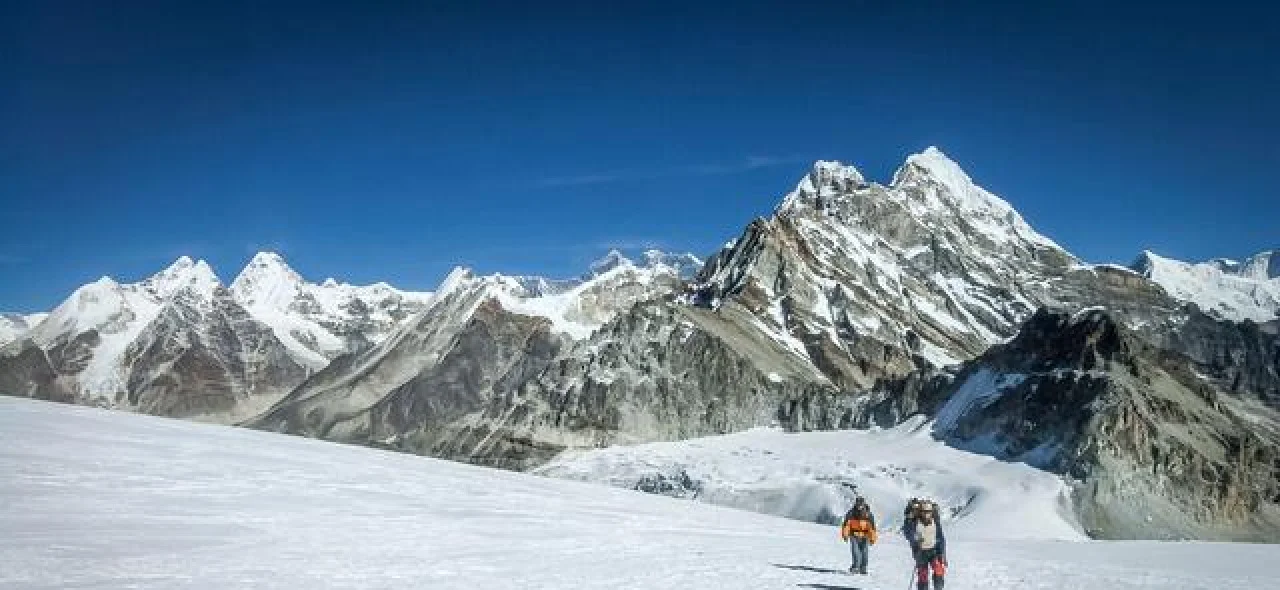
Today you leave Khare and begin the actual climbing approach toward Mera High Camp. The route initially climbs toward the Mera Glacier and then enters increasingly icy and rocky terrain. Depending on current conditions, you may need to use crampons and other mountaineering equipment as you progress higher. The trail becomes more demanding as the altitude increases, so maintaining a slow and controlled pace is essential. After several hours of climbing, you reach Mera High Camp at approximately 5,780 meters. From camp, you may enjoy magnificent views of the surrounding Himalayan peaks. The afternoon and evening are spent preparing climbing equipment, eating an early meal, and getting as much rest as possible before the summit attempt.
Today is the most challenging and rewarding day of the expedition as you attempt to reach the summit of Mera Peak at 6,461 meters. You will start very early, often before sunrise, to take advantage of favorable climbing conditions. Equipped with crampons, harnesses, ropes, and an ice axe as required, you ascend gradually across snow and glaciated terrain under the guidance of your experienced climbing team. As daylight arrives, the surrounding Himalayan peaks become increasingly spectacular. After reaching the summit, you will have time to appreciate the extraordinary panorama before beginning the descent. You then return toward Khare, where you can rest and celebrate the successful completion of the main climbing objective.
This reserve day is included as a safety buffer for the Mera Peak expedition. High-altitude climbing is strongly influenced by weather, snow conditions, visibility, and the physical condition of the climbing team, so a flexible schedule is essential. If the summit attempt on Day 12 is successful and conditions allow, this day can be used as an additional rest or recovery day around the Khare area. If unfavorable weather or other circumstances prevent the summit attempt, your Trail Mania Trek climbing team may use this day to make another attempt, provided conditions are safe. The final decision will always prioritize climber safety and mountain conditions.
After completing the Mera Peak climbing section, you begin your descent from Khare toward Kothe. Descending to a lower elevation provides a welcome opportunity to recover after the demanding summit experience. The trail retraces sections of the Hinku Valley route, passing through rocky mountain landscapes and alpine vegetation before gradually reaching greener terrain. Since descending can still place considerable strain on your knees and legs, you will maintain a controlled pace and take regular breaks. After approximately four to five hours of trekking, you reach Kothe. The lower elevation and comfortable surroundings make this a pleasant recovery evening where you can enjoy a warm meal and reflect on your climbing achievement.
Today you trek from Kothe toward Thuli Kharka, following a trail that involves several climbs and descents through beautiful forested mountain terrain. The route gradually leaves the Hinku Valley and heads toward the higher pass area used on the return journey to Lukla. Rhododendron and other Himalayan vegetation create a scenic setting, while distant mountain views accompany sections of the trail. Although you have already completed the summit, this day still requires good energy and steady pacing. After approximately five to six hours, you reach Thuli Kharka, where you can rest and enjoy the evening in the mountain lodge before the final challenging trekking day toward Lukla.
Today is one of the final and most scenic trekking days of the journey. From Thuli Kharka, the trail climbs toward the Zatrwa La Pass, reaching approximately 4,600 meters. The ascent requires steady effort, but the views from the pass provide a memorable reward, with expansive Himalayan landscapes stretching across the surrounding valleys and mountains. After crossing the pass, you begin a long descent toward Lukla. The change in scenery becomes noticeable as the trail gradually enters greener terrain and lower elevations. After around six to seven hours of trekking, you arrive in Lukla, where you can enjoy a well-deserved rest and celebrate the completion of the trekking portion of your Mera Peak expedition.
After breakfast, you prepare for your flight from Lukla back to Kathmandu. The short mountain flight provides one final opportunity to enjoy aerial views of the Himalayan landscape and the rugged valleys you have traveled through on foot. Upon arrival in Kathmandu, a representative from Trail Mania Trek will assist with your transfer to the hotel. The remainder of the day is free for relaxation, shopping, or exploring the city at your own pace. You may also want to enjoy a celebratory meal after completing the Mera Peak expedition. Overnight at your Kathmandu hotel, with the evening available to relax and recover.
Your Mera Peak adventure with Trail Mania Trek comes to an end today. Depending on your flight schedule, you may have some free time in Kathmandu for last-minute shopping, taking photographs, or enjoying a final breakfast in the city. A representative from Trail Mania Trek will arrange your transfer to Tribhuvan International Airport according to your departure time. As you leave Nepal, you take home memories of the Himalayan trails, traditional mountain villages, challenging high-altitude landscapes, and the rewarding experience of standing on Mera Peak. We hope the expedition has been an unforgettable part of your Nepal journey and look forward to welcoming you again for another Himalayan adventure.
Your Start Date is the day you land in Nepal, and your End Date is when you fly home.
If the set Mera Peak Climbing group dates don’t suit your schedule, we can offer alternative dates upon request.
Mera Peak Climbing is an exciting Himalayan mountaineering adventure that combines several days of trekking with a non-technical-to-moderately technical high-altitude summit climb. Standing at 6,461 meters (21,199 feet), Mera Peak is one of Nepal’s highest trekking peaks and offers spectacular views of Everest, Lhotse, Makalu, Baruntse, and other Himalayan giants. With Trail Mania Trek, the journey is organized with experienced guides, proper acclimatization, climbing preparation, and a carefully planned itinerary designed to make the expedition as safe and enjoyable as possible.
Mera Peak Climbing is considered a challenging high-altitude adventure because of the elevation, long trekking days, cold temperatures, and summit-day physical demands. Although the climbing route does not generally involve highly technical mountaineering, climbers should be comfortable walking for several hours in mountainous terrain and using basic climbing equipment. The high altitude is one of the biggest challenges. Trail Mania Trek provides acclimatization days and pre-climb training to help participants become familiar with crampons, ice axes, ropes, and other essential climbing equipment before attempting the summit.
Previous mountaineering experience is helpful but is not always essential for Mera Peak. People with good physical fitness, strong determination, and appropriate preparation can undertake the climb with professional guidance. However, participants should understand that Mera Peak is a high-altitude expedition rather than an ordinary trekking trip. Trail Mania Trek provides pre-climb training at Khare, where your guide can introduce you to essential techniques and equipment. Previous experience with snow, crampons, or an ice axe can certainly increase your confidence and make the climbing experience more comfortable.
The itinerary described by Trail Mania Trek takes 18 days from arrival in Kathmandu through final departure. The journey includes Kathmandu preparation, the flight to Lukla, trekking through Paiya, Panggom, Ningsow, Chhatra Khola, Kothe, Thaknak, and Khare, followed by acclimatization and climbing preparation. The expedition then includes the high-camp and summit sections before descending through Kothe and Thuli Kharka to Lukla. A reserve day is also incorporated into the itinerary because Himalayan weather can change rapidly and summit attempts sometimes need to be adjusted.
A good level of cardiovascular fitness and general physical strength is strongly recommended for Mera Peak Climbing. You should be comfortable walking for several consecutive days, including some days involving six to eight hours of trekking. Training before the expedition can include hiking, stair climbing, running, cycling, strength exercises, and regular long-distance walks. It is particularly useful to train while carrying a light backpack. Trail Mania Trek recommends beginning physical preparation well before departure so that you arrive in Nepal ready to handle the long trekking days and demanding summit push.
Acclimatization is one of the most important aspects of a successful Mera Peak expedition. The itinerary gradually gains elevation instead of moving directly to high altitude, giving your body time to adjust. The schedule includes an acclimatization and pre-climb training day at Khare, while the gradual progression through Kothe and Thaknak also supports altitude adaptation. Trail Mania Trek guides monitor your condition throughout the journey and encourage appropriate rest, hydration, and pacing. If you experience concerning altitude-related symptoms, your guide can recommend appropriate action based on the circumstances.
Summit day is normally the most demanding part of the entire expedition. You will begin very early from Mera High Camp, often before sunrise, to allow sufficient time for the ascent and descent. The climb takes you across high-altitude snow and glacier terrain, where you may use crampons, an ice axe, a harness, and rope systems under the guidance of your climbing team. The final ascent requires patience and controlled pacing because of the thin air. Once you reach the summit at 6,461 meters, you can enjoy spectacular Himalayan panoramas before beginning the descent toward Khare with Trail Mania Trek.
Yes, the itinerary includes a reserve day because mountain weather and climbing conditions can be unpredictable. A summit attempt may sometimes need to be postponed because of strong winds, snowfall, poor visibility, route conditions, or other safety concerns. The reserve day gives the climbing team additional flexibility if the original summit schedule cannot be followed. If the summit has already been successfully completed and no contingency is required, the day can serve as additional recovery time. Trail Mania Trek places safety first and will make decisions according to weather, route conditions, and the overall condition of the climbing team.
Choosing the right trekking company is important for a high-altitude expedition such as Mera Peak. Trail Mania Trek focuses on providing organized itineraries, experienced trekking and climbing support, acclimatization planning, equipment guidance, and attention to safety throughout the journey. The company can assist from your arrival in Kathmandu through airport transfers, trekking logistics, climbing preparation, summit support, and your return to Kathmandu. A well-managed expedition allows you to concentrate on enjoying the Himalayan landscapes and achieving your climbing goal while the team handles the practical aspects of the adventure.
The best seasons for Mera Peak Climbing are generally spring and autumn. Spring, particularly from March to May, usually offers favorable mountain conditions, clearer views, and relatively stable weather. Autumn, especially from September to November, is another popular period because of generally clear skies and excellent visibility. Winter can bring extremely cold temperatures and heavy snow, while the monsoon season may cause rain, clouds, and flight disruptions at lower elevations. Trail Mania Trek can help you select suitable dates based on seasonal conditions, your schedule, and the overall climbing objectives.
Mera Peak requires appropriate trekking and mountaineering equipment because the summit route includes snow and glaciated terrain. Essential climbing equipment can include crampons, an ice axe, climbing harness, helmet, ropes, carabiners, suitable mountaineering boots, warm layers, gloves, goggles, and a quality sleeping bag. You will also need normal trekking clothing, a backpack, water bottles, headlamp, personal medications, and other basic supplies. Trail Mania Trek will provide guidance about the required equipment before the expedition and can help you determine which items should be brought personally and which may be arranged or rented in Kathmandu.
During the trekking portion, accommodation is generally provided in local teahouses or mountain lodges, where facilities become increasingly basic as you gain altitude. Rooms are typically simple, and shared accommodation may be required in some locations depending on availability. At higher elevations, facilities are more limited, particularly around high camp. Meals generally consist of practical trekking foods such as rice, noodles, pasta, soup, potatoes, vegetables, eggs, bread, and other locally available dishes. Trail Mania Trek coordinates accommodation and meals according to the itinerary while taking into account the remote nature of the Mera Peak region.